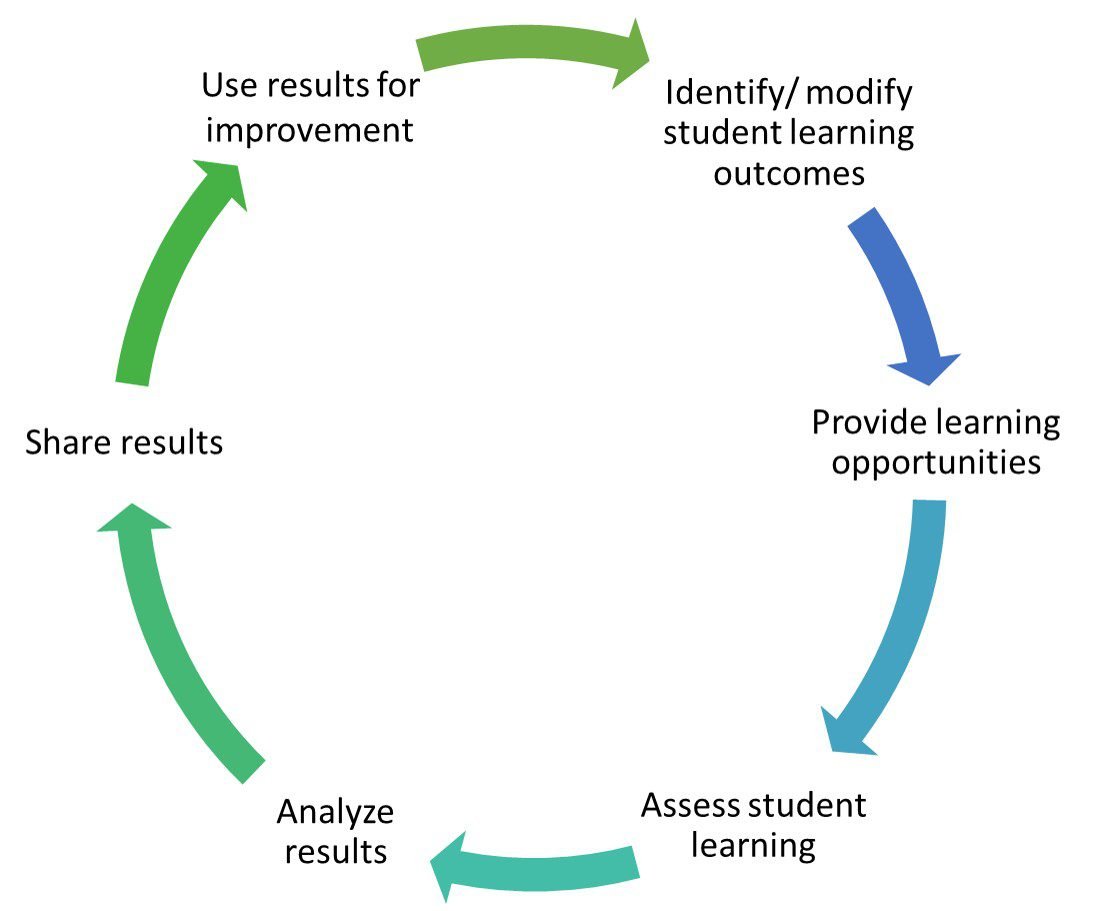
Mastering any new skill or subject hinges on a delicate balance: the inherent quality of the learning material, the depth of the instructor's knowledge, and the ultimate clarity of what you're expected to achieve. When Course Content Quality, Instructor Expertise & Learning Outcomes are meticulously aligned, the result isn't just education; it's transformation. This isn't academic jargon; it’s the bedrock of effective learning, whether you’re pursuing a degree, upskilling for a career, or simply satisfying a personal curiosity.
Too often, we focus solely on the delivery—the glitzy platform, the fancy videos—and forget the foundational elements that truly drive deep understanding and measurable progress. This guide pulls back the curtain on these essential components, showing you exactly how they intertwine to create truly impactful educational experiences.
At a Glance: What You'll Discover
- Learning Outcomes aren't just buzzwords: They're your compass, guiding course design, teaching, and learning.
- The ABCD framework: A simple, powerful way to write clear, measurable outcomes.
- SMART goals apply here too: How to make your outcomes Specific, Measurable, Attainable, Related, and Time-bound.
- Instructor expertise is non-negotiable: Why a truly knowledgeable and skilled instructor elevates everything.
- Quality content goes beyond information: It's about relevance, engagement, and effective scaffolding.
- The unbreakable link: How these three elements combine to ensure you actually learn what you set out to.
The Unbreakable Trio: Course Content Quality, Instructor Expertise & Learning Outcomes
Imagine embarking on a journey without a map, a guide, or any idea of your destination. That’s what learning can feel like when the core elements of a course are uncoordinated. At the heart of successful education lies a powerful, symbiotic relationship between what you’re taught, who teaches you, and what you're expected to achieve.
Let’s start with the cornerstone: Course Learning Outcomes (CLOs). These aren't just bullet points on a syllabus; they are concise, measurable statements that articulate what you, the student, will know, be able to do, or even what attitudes you will hold by the end of a course. They act as a concrete framework, guiding the development of specific knowledge, skills, and attitudes.
Think of it this way:
- Learning Goals describe the broader, general aims for an entire course or program – like "Students will develop critical thinking skills."
- Learning Objectives are more focused, detailing what you’ll achieve in a specific lesson or activity – like "By the end of this module, students will be able to analyze primary source documents."
- Course Learning Outcomes bridge these, offering specific, assessable targets for the entire course – "You will be able to critically analyze primary source documents to identify historical biases."
Without clearly defined CLOs, course content can drift, instructors might teach what they think is important rather than what’s truly impactful, and students are left guessing what success looks like.
Why Learning Outcomes Aren't Just Academic Mumbo Jumbo
Learning outcomes might sound like something dreamt up in an ivory tower, but their practical benefits ripple across everyone involved in the learning process. They’re not just about checking boxes; they're about fostering clarity, efficiency, and true understanding.
For Course Design & Instruction: Building a Strong Foundation
Clearly defined CLOs are the architect’s blueprint for an effective course. They make the entire design process more strategic, ensuring every activity, every reading, and every assignment directly contributes to a measurable goal.
- Structured Learning: They provide a roadmap, structuring the learning journey from start to finish.
- Targeted Instruction: Instructors can plan and deliver lessons that precisely address the desired learning, avoiding tangents or irrelevant topics.
- Transparent Assessment: CLOs establish a clear framework for transparent and equitable assessment, ensuring that tests and projects actually measure what students were meant to learn.
For Instructors: Teaching with Purpose
For those in the educator’s seat, CLOs are invaluable tools for focused teaching and continuous improvement.
- Efficient Measurement: Instructors can accurately and efficiently gauge student learning, quickly seeing where students excel and where they struggle.
- Aligned Assessments: They guide the design of assessments that perfectly align with learning activities—whether those activities target knowledge, skills, or specific attitudes.
- Dynamic Planning: CLOs provide a solid basis for planning new course content and confidently updating existing material, keeping it fresh and relevant.
For Students: Your Personal Learning GPS
As a student, CLOs are your secret weapon. They demystify the learning process and empower you to take control of your education.
- Course Fit: They help you determine if a course genuinely fits your academic or career trajectory, preventing wasted time and effort.
- Clear Expectations: You’ll identify exactly what knowledge, skills, and attitudes you are expected to acquire, removing ambiguity.
- Success Strategies: CLOs help you understand what you need to do to succeed, allowing you to focus your attention on essential learning.
- Prioritization: You can set priorities, ensure your work is on-target, and monitor your own progress, transforming passive learning into an active pursuit.
A Regulatory Imperative (and a Good Idea Everywhere)
In some regions, like New York State, the inclusion of course learning outcomes on all syllabi isn't just a best practice—it's a regulatory requirement. This highlights their recognized importance in ensuring educational quality and accountability. Even where not mandated, they signify a commitment to student success and transparent academic standards.
Crafting Clarity: The ABCD of Effective Learning Outcomes
So, how do you write these magical statements? It’s not about flowery language but precise, actionable phrasing. The ABCD approach is a widely recognized framework that ensures your outcomes are clear, measurable, and appropriately scoped.
Every effective CLO should include these four key elements:
1. Audience: Who's Doing the Learning?
This element is simple but crucial: define who will achieve the outcome. The focus should always be on the student.
- Examples: "Students will be able to...", "You will be able to..."
- Pitfall to Avoid: Focusing on the instructor's actions ("I will teach students to...")
2. Action (Behavior): What Will They Do?
This is where the rubber meets the road. The action describes what students will do to demonstrate their learning. This requires specific, unambiguous action verbs that are observable and measurable.
- Use Action Verbs: "Illustrate," "categorize," "determine," "justify," "perform," "produce," "design," "build," "compose," "derive," "modify," "develop," "defend," "argue," "integrate," "respond," "create," "investigate," "evaluate," "analyze," "solve," "operate," "demonstrate."
- Avoid Vague Verbs: "Know," "understand," "appreciate," "learn"—these are internal states that are difficult to observe or measure directly. How do you measure "understanding"? You measure a student's ability to explain or apply what they understand.
- Leverage Taxonomies: Learning taxonomies like Bloom's Taxonomy (cognitive, psychomotor, affective domains) and the Taxonomy of Significant Learning (knowledge, application, integration, human dimension, caring, learning how to learn) are excellent resources for selecting appropriate verbs that match the cognitive level desired. For instance, "recall" is a lower-order thinking skill, while "evaluate" is a higher-order one.
3. Object: What Are They Acting Upon?
The object specifies the course-specific learning and content on which the action operates. This is the "what" of the learning.
- Examples: "...ordinary and partial differential equations," "...formal and informal logical analysis," "...the principles of classical conditioning," "...strategies for effective team collaboration."
4. Scoping Condition: Under What Circumstances?
This provides essential context or conditions under which the learning will be demonstrated. It clarifies the "how" or "where" of the performance.
- Elements: Equipment, tools, resources, situation, environment, or format/modality.
- Examples: "...using secondary literature," "...with cultural awareness and emotional intelligence," "...given a diagram of the eye," "...in a simulated business environment," "...without the aid of notes."
- Crucial Note: These conditions should always be accessible and realistic for the learning environment.
5. Degree: How Well Should They Do It?
While not always explicitly written for every CLO, the "Degree" component indicates the standard or criterion for acceptable performance. This is often tied to real-world expectations or the level of mastery required.
- Examples: "...with 90% accuracy," "...within 10 minutes," "...suitable for submission to a peer-reviewed journal," "...demonstrating proficiency in all core functions," "...adhering to industry best practices."
An Example to Deconstruct:
Let’s look at the structure provided and break it down:
"You will be able to demonstrate (action) the accuracy, intonation and expressive control of your instrument (object) required for artistic self-expression in a solo performance (scoping condition)."
Here, the implied audience is "You," and the degree of performance is "required for artistic self-expression." This CLO clearly sets expectations for a music student.
Beyond the Basics: SMART Outcomes & Other Best Practices
While ABCD gives you the building blocks, other best practices elevate your learning outcomes from merely adequate to truly exceptional.
The SMART Criteria: Your Quality Checklist
Effective learning outcomes aren't just well-structured; they're also SMART:
- Specific: Is the outcome clear and well-defined? Does it avoid ambiguity? (This aligns perfectly with the ABCD approach.)
- Measurable: Can you actually assess whether the student has achieved the outcome? This often involves quantifiable metrics or observable behaviors.
- Attainable: Is it realistic for students to achieve this outcome within the course timeframe and with the available resources? Setting impossible goals only frustrates learners.
- Related (or Relevant): Does the outcome genuinely relate to the overall course goals, program objectives, and student interests? Is it meaningful?
- Time-bound: Is it clear by when the outcome should be achieved (e.g., "by the end of the semester," "upon completion of the module")?
Other Essential Best Practices:
- Limited Number: Resist the urge to create a laundry list. Best practice recommends having no more than three to five actionable and measurable CLOs for an entire course. Too many can dilute focus and overwhelm both instructors and students.
- Learner-Centered: Always frame outcomes from the student's perspective. Use second-person pronouns ("you," "students") and keep the language jargon-free where possible. The outcome is about their achievement.
- Time-Bound: Explicitly state the timeframe for achievement, usually "by the end of the course/semester."
- Aligned with Level and Discipline: Ensure outcomes are appropriate for the course level (introductory vs. advanced) and consistent with the norms and expectations of the academic discipline.
- Review and Revise: CLOs aren't set in stone. Regularly review them to ensure they remain relevant, accurate, and achievable as content evolves or student needs change.
The Instructor's Role: Expertise as the Engine of Quality
You can have perfectly crafted learning outcomes and stunningly produced course materials, but without a skilled instructor, the learning journey can falter. Instructor expertise isn't just about knowing the subject inside and out; it's about the ability to translate that knowledge into meaningful, accessible, and engaging learning experiences.
Subject-Matter Mastery: The Deep Well of Knowledge
A truly expert instructor possesses a profound understanding of their field. They don't just recall facts; they grasp nuances, understand complex relationships, and can contextualize information within broader disciplinary frameworks. This mastery allows them to:
- Ensure Accuracy and Currency: High-quality content starts with accurate and up-to-date information. An expert instructor continuously monitors developments in their field, ensuring the course material reflects the latest research, best practices, and real-world applications.
- Provide Depth and Nuance: They can go beyond surface-level explanations, offering rich insights, alternative perspectives, and practical applications that canned content often lacks.
- Answer Complex Questions: When students inevitably encounter difficulties or pose challenging questions, an expert can provide clear, comprehensive, and tailored responses, bridging knowledge gaps effectively.
Pedagogical Skill: The Art of Teaching
Knowing a lot is one thing; teaching it effectively is another. Pedagogical expertise refers to an instructor’s ability to design, deliver, and facilitate learning in ways that optimize student understanding and engagement. This includes:
- Translating Complexity: Breaking down complex topics into digestible components, using analogies, examples, and scaffolding techniques to build understanding progressively.
- Fostering Engagement: Employing diverse teaching strategies—from interactive discussions to hands-on activities, case studies, and multimedia—to keep students actively involved.
- Adapting to Learners: Recognizing different learning styles and needs, and adapting instruction accordingly. A skilled instructor can identify when a student is struggling and offer targeted support or alternative explanations.
- Creating a Supportive Environment: Building a classroom (virtual or physical) where students feel safe to ask questions, make mistakes, and engage in critical discourse.
- Designing Effective Assessments: Aligning assessments directly with learning outcomes, and providing constructive, actionable feedback that genuinely helps students improve.
It's this blend of deep content knowledge and skillful instruction that differentiates a truly transformative learning experience from merely consuming information. Platforms that attract top-tier experts understand this dynamic well. For example, if you're weighing the value of a platform featuring renowned figures, understanding the caliber of their expertise and how it translates into teaching can help you Decide if MasterClass is worth it. The instructor's ability to not only "know" but also to "show" and "guide" is paramount.
Course Content: The Blueprint for Success
If learning outcomes are your destination and the instructor is your guide, then course content is the map, the terrain, and the tools you use along the way. Quality content is far more than just information; it's a carefully constructed ecosystem designed to facilitate learning.
What Constitutes "Quality" Course Content?
- Relevance: Is the content directly aligned with the stated learning outcomes? Every piece of material should serve a clear purpose in helping students achieve those outcomes. Irrelevant content creates noise and distraction.
- Accuracy and Currency: As discussed, the information must be correct and up-to-date. In fast-evolving fields, outdated content can be detrimental.
- Clarity and Conciseness: Is the language clear, easy to understand, and free of unnecessary jargon? Can complex ideas be explained simply without losing their essence?
- Engagement and Variety: Quality content isn't just text. It incorporates diverse formats—video lectures, interactive simulations, real-world case studies, rich media, discussion prompts, hands-on exercises, and challenging problems. Variety keeps learners engaged and caters to different learning preferences.
- Scaffolding and Progression: Content should be structured logically, building from foundational concepts to more complex ones. Each new piece of information should connect smoothly to what came before, gradually challenging the learner without overwhelming them.
- Accessibility: Is the content accessible to all learners, including those with disabilities? This includes considerations for screen readers, captions for videos, and alternative text for images.
- Practical Application: Does the content provide opportunities for students to apply what they've learned? Real-world examples, simulations, and project-based assignments are crucial for solidifying understanding and developing practical skills.
- Feedback Opportunities: The content itself can incorporate opportunities for immediate feedback, such as self-check quizzes, interactive exercises, or peer review mechanisms.
The Alignment Imperative
The most critical aspect of course content quality is its alignment with the CLOs. Every module, every reading, every assignment, every discussion prompt should be traceable back to one or more of your course learning outcomes. This "constructive alignment" ensures that students are always working towards the stated goals, and that assessments truly measure their progress in achieving those goals. Without this alignment, even brilliant content can miss its mark.
Measuring Success: Assessing Against Outcomes
The power of well-defined learning outcomes truly shines when it comes to assessment. When CLOs are clear, designing assessments becomes far more straightforward and effective.
From Outcomes to Assessment Design
- Blueprint for Tests: CLOs act as a direct blueprint for creating tests, quizzes, projects, and presentations. If an outcome states "You will be able to analyze the causes of World War I," then your assessment should require analysis, not just recall of facts.
- Formative vs. Summative:
- Formative assessments (e.g., in-class activities, low-stakes quizzes, discussion posts) are designed to monitor learning during the course, providing ongoing feedback to both students and instructors. They help identify areas where students need more support to achieve the CLOs.
- Summative assessments (e.g., final exams, major projects, capstone presentations) evaluate student learning at the end of an instructional unit or course, measuring achievement against the CLOs.
- Clear Rubrics: Well-defined CLOs make it easier to create explicit rubrics for projects and assignments. These rubrics clearly articulate the criteria for acceptable performance, often directly reflecting the language and expectations set forth in the outcomes. This transparency helps students understand how their work will be evaluated and why.
- Feedback Loops: Assessments aren't just for grades; they're vital feedback mechanisms. When feedback is tied directly to CLOs, it becomes more actionable. An instructor can say, "Your essay did not adequately justify your argument using evidence, as required by CLO #2," rather than just, "This isn't a strong argument." This helps students understand how to improve.
Ultimately, the goal of assessment is not just to assign a grade, but to provide evidence that the student has achieved the intended learning outcomes. When all three pillars—content quality, instructor expertise, and learning outcomes—are strong and aligned, assessment becomes a reliable measure of true learning.
Common Questions & Misconceptions About Learning Outcomes
Even with the best intentions, confusion can arise. Let's tackle some frequent questions and clear up common misconceptions.
"Are learning goals and objectives the same as learning outcomes?"
Not quite. Think of it as a hierarchy:
- Learning Goals are broad, overarching statements for an entire program or course (e.g., "Students will become effective communicators").
- Learning Outcomes are more specific, measurable statements for a course, detailing what students should be able to do by the end (e.g., "Students will be able to compose a persuasive essay demonstrating clear argumentation").
- Learning Objectives are the most granular, describing what students will achieve in a single lesson or activity (e.g., "Students will be able to identify the main components of a persuasive essay outline").
They all work together to define the learning journey, but outcomes are the most direct targets for assessment.
"Can I just copy outcomes from another course or textbook?"
It's generally not a good idea. While inspiration can be drawn from existing materials, each course is unique in its specific content, pedagogical approach, student audience, and institutional context. Generic outcomes might not truly reflect what you intend to teach or what your students will specifically achieve. Tailor your outcomes to your course, making them SMART and aligned with your content and instructor expertise.
"Do I need outcomes for every single lesson or topic?"
No, not necessarily for every minute detail. While it's helpful to have learning objectives for individual lessons or modules to guide instruction, the core requirement is typically for a limited number (3-5) of high-level Course Learning Outcomes. These broad outcomes encompass the key knowledge and skills students will gain over the entire course. Lesson-level objectives then serve as stepping stones towards those larger outcomes.
"What if my outcomes change mid-course?"
Flexibility is key, but transparency is paramount. If you find that an outcome is genuinely unachievable, needs refinement, or a new, more relevant outcome emerges due to evolving content or student needs, it's acceptable to adjust. However, any changes should be communicated clearly and promptly to students, along with an explanation of why the change was made and how it might affect their learning or assessment. Open communication maintains trust and keeps everyone aligned.
Elevating Your Educational Offerings
The journey to superior learning experiences is continuous. It’s not about finding a magic bullet, but consistently nurturing the fundamental relationship between course content quality, instructor expertise, and clearly defined learning outcomes.
For course creators and instructors, this means:
- Invest time upfront in crafting clear, actionable, and measurable learning outcomes using the ABCD and SMART frameworks. These are your guiding stars.
- Continuously develop your expertise, not just in your subject matter, but in effective pedagogy. Seek out professional development, learn new teaching strategies, and embrace feedback.
- Obsess over your content. Is it accurate, relevant, engaging, and scaffolded effectively? Does every piece of content directly serve a learning outcome?
- Align everything. Ensure your instruction, activities, and assessments are all working in harmony to help students achieve those outcomes.
For students, this means: - Actively seek out courses that clearly articulate their learning outcomes. This transparency is a strong indicator of a well-designed course.
- Use outcomes as your roadmap. Refer to them regularly to understand what's expected, focus your study, and monitor your own progress.
- Demand quality. Look for instructors who demonstrate both deep expertise and effective teaching skills, and content that is engaging and relevant.
When all these elements converge, education ceases to be a passive reception of information and becomes an active, empowering journey towards tangible skills and profound understanding. It's about designing for success, teaching with purpose, and learning with clarity.